
If you’ve ever sat in a doctor’s office, described months of fatigue, hair loss, irregular cycles, or relentless anxiety, and been told your labs are normal, this post is for you. As a registered dietitian who has personally navigated Hashimoto’s disease and autoimmune health challenges, I understand both the clinical picture and the lived experience of feeling dismissed. In this post I want to walk through the six pillars I use at New York City Nutrition to support women’s health, explain why so many women are under-fueling without knowing it, and share what a root-cause, collaborative approach to nutrition actually looks like, including how personalized meal support from Square Fare plays a role in making these protocols sustainable in real life.
“Your labs are fine” but you know something is wrong
I hear this constantly. A woman comes to me having seen multiple providers. She’s been told her bloodwork is normal. She’s been told that fatigue, brain fog, hair changes, and mood shifts are just part of getting older, or part of being a busy person in New York City. They’re not.
One of the things that shaped how I practice is the experience of working with wounded soldiers going through significant GI distress, and the psychological weight that comes with it. That taught me early on that symptoms are never just physical, and that being heard is itself part of the healing process. As women in healthcare, we get dismissed at a disproportionate rate. A 2021 study published in the Journal of Women’s Health found that women wait significantly longer than men to receive diagnoses for conditions that affect both sexes. Part of my job is to validate what my clients are experiencing and then dig into why it’s happening.
Standard lab reference ranges are built around population averages, not optimal function. Being within range means you’re not in the most concerning category. It does not mean your body is functioning the way it should. I look at patterns, at how symptoms connect across different systems, and at what the numbers look like in context of how someone is actually living their life. This is the foundation of the root-cause approach recognized by the Institute for Functional Medicine.
The six pillars: why it’s never just about food
When clients come to New York City Nutrition, they often expect to receive a meal plan. What they get instead is a whole-picture assessment, because the research and my clinical experience are clear that nutrition alone, without attention to the other factors driving health, produces incomplete results.
The six pillars I address with every client are:
- Nutrition: What you’re eating, how much, and critically, what you may be missing. Most of the women I see are under-consuming, not over-consuming. Getting more in, more color, more nutrients, more variety, is usually the direction we need to go, not less. The Academy of Nutrition and Dietetics recognizes individualized nutrition assessment as the foundation of effective dietary intervention.
- Mindset: The psychological relationship with food matters enormously. I never tell clients what they can’t eat. The moment you tell someone they can’t have something, that’s the thing they’re going to want most. Research on the psychology of dietary restriction consistently shows that prohibition-based approaches increase preoccupation with restricted foods. Instead, I focus on how we can enhance what someone’s eating, not what we’re taking away.
- Gut health: The gut is connected to hormones, immunity, mood, skin, and energy in ways that most conventional medicine still underestimates. The American Gastroenterological Association has documented the far-reaching systemic effects of gut microbiome health. Many of the hormonal symptoms I see in practice have a gut component that, when addressed, changes the entire picture.
- Stress: Chronic stress is not just a mental health issue. It directly affects cortisol, which affects blood sugar, thyroid function, immune regulation, and weight. Research published in Psychoneuroendocrinology has extensively documented the downstream metabolic effects of chronic cortisol elevation. I see a lot of women who are running on caffeine and cortisol, and they don’t even realize it’s the cortisol that’s the problem.
- Sleep: Inadequate sleep disrupts hunger hormones (leptin and ghrelin), increases cortisol, impairs blood sugar regulation, and undermines every other pillar. The National Sleep Foundation recommends 7 to 9 hours for adults, and the research on sleep deprivation’s metabolic effects is unambiguous.
- Movement: Specifically, the right amount and the right kind. One of the most consistent patterns I see is women who are under-fueling and over-exercising, which over time suppresses metabolism, affects thyroid function, and makes it nearly impossible to achieve the results they’re working toward. To address this gap directly, we recently added personal training to our services at New York City Nutrition with a provider who is both a licensed registered dietitian and a certified personal trainer, so strength programming and nutritional support are fully integrated rather than working at cross-purposes.
These six pillars are interconnected. Addressing one without the others produces limited results, which is why a siloed approach to women’s health often leaves people feeling like they’ve tried everything and nothing works.
The under-fueling problem
The pattern that surprises my clients most is that the reason they’re not feeling better, and in many cases the reason they’re not losing weight despite significant effort, is that they’re not eating enough.
Under-fueling is one of the most common and underdiagnosed issues in the women I see. When you consistently consume too little, whether from dieting, a chaotic schedule, skipping meals, or simply not knowing how much you actually need, several things happen. Your metabolism slows. Your body holds onto weight as a protective mechanism. Your thyroid function can become compromised. Your T3 levels can drop. Your hunger hormones dysregulate. Research published in Obesity Reviews has documented how chronic caloric restriction triggers adaptive metabolic responses that work against weight loss over time.
I often see clients who have skipped breakfast, skipped lunch, and had three coffees by the time they come to see me, then wonder why their energy is on the floor and their labs look the way they do. The intervention is not another restriction. It’s getting enough nourishment.
This is also one of the places where having meals handled is so helpful. When I work with Square Fare, I share my clients’ nutritional specifications, what they need in terms of macros, micronutrients, and any restrictions, and the meals arrive ready. My clients who have the most demanding schedules, working 10 or 12-hour days in finance or architecture or healthcare, are not going to meal plan on top of that. Telling them to is not realistic guidance. Telling them that their nourishment can be delivered, ready in a minute, and already calibrated to what their body needs, that’s something they can actually do. You can see the Square Fare menu here, and one of the things I always point out to clients is the vibrant and diverse color in these meals, which tells you that it’s nutritious.
Perimenopause: it’s not “just part of life”
The symptoms of perimenopause, including brain fog, hair changes, anxiety, sleep disruption, weight shifts, and hot flashes, are real, significant, and not something you simply have to endure. And yet symptoms are still frequently dismissed. The Menopause Society has published extensive clinical guidelines on the undertreatment of perimenopause symptoms and the importance of individualized hormonal and nutritional support.
Here’s what I want every woman in perimenopause to understand:
Estrogen is neuroprotective and cardioprotective. As it declines, the risk of cardiovascular disease and cognitive decline increases. Research published in Alzheimer’s and Dementia has documented that women face a higher lifetime risk of Alzheimer’s disease than men, with the loss of neuroprotective estrogen during menopause identified as a contributing factor. Anti-inflammatory nutrition, specifically adequate omega-3 fatty acids, is a meaningful and evidence-based intervention.
Progesterone decline often shows up first as anxiety. Before my clients know they’re in perimenopause, they’ll often come to me describing a new and unexplained anxiety that didn’t exist before. When progesterone drops, this is one of the earliest signals the body sends. Knowing this means we can address it, rather than treating the anxiety in isolation.
Blood sugar stability becomes more critical. Estrogen has a regulatory effect on insulin sensitivity. As it declines, blood sugar management becomes harder, and the dietary patterns that supported a woman in her 30s may stop working in her 40s. This is not a failure. It’s a physiological change that requires an adjusted nutritional strategy. The American Diabetes Association has published on the relationship between estrogen decline and increased insulin resistance during the menopause transition.
Phytoestrogens can offer partial support. Foods like flaxseed, soy, and certain legumes contain plant compounds that interact with estrogen receptors in the body. A review published in Nutrients found that phytoestrogen consumption was associated with modest reductions in hot flash frequency and severity in some women. They are not a replacement for estrogen, but they can help.
I also work closely with a vetted network of medical providers who are genuinely informed about perimenopause and women’s hormonal health. If you’re looking for a practitioner in New York City who takes these symptoms seriously, New York City Nutrition maintains a trusted referral list.
PMOS, Hashimoto’s, and getting your cycle back
One of the most meaningful cases I’ve worked on involved a patient who had not had a menstrual cycle until she was 22 years old. By the time she came to me, she was in her mid-twenties and going through a fertility journey. She had seen top physicians in New York and at Cleveland Clinic and had been told she had PCOS (now PMOS). The standard labs had been run and standard advice given, but we decided to go deeper.
We ran comprehensive hormone testing, looked at her gut health, assessed her diet in detail, and found that she was significantly under-consuming certain key nutrients, following a protocol from a well-known book that simply wasn’t right for her body. PCOS affects approximately 1 in 10 women of reproductive age according to the NIH, making it one of the most common hormonal conditions, and yet it is consistently undertreated and under-investigated at the root cause level.
Together, we made changes, adding targeted supplementation based on her labs. We adjusted her macronutrient balance and addressed specific nutrient deficiencies. And she got her menstrual cycle, regular and monthly, for the first time in her life. This client called me recently to tell me that she’s pregnant. Calls like this mean so much to me as a clinician and as a human, and remind me why this work matters.. We celebrated together.
I have also seen Hashimoto’s thyroiditis, an autoimmune condition affecting the thyroid that I live with myself, go into remission with the right nutritional and lifestyle support. These are not outlier results. They are the outcomes that become possible when the root cause is addressed rather than the surface symptom.
What I look for in the food itself: color, variety, and freshness
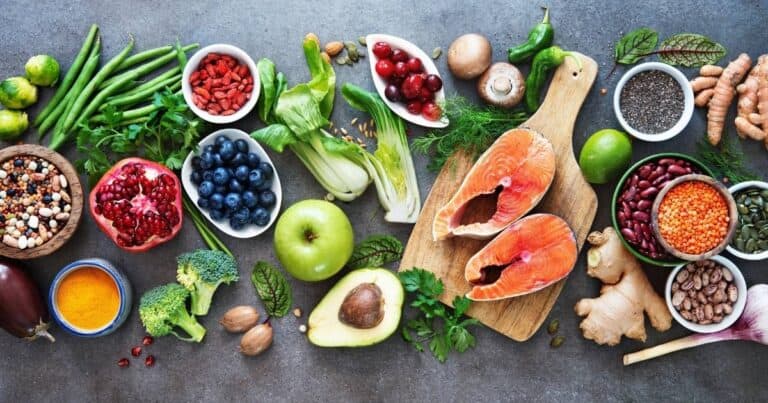
When I look at a meal, one of the first things I notice is color. Color is nutritional information. Different pigments correspond to different families of phytonutrients, polyphenols, antioxidants, carotenoids, and eating a varied palette of colors across the week is one of the most practical ways to ensure nutritional breadth. The USDA’s MyPlate guidelines emphasize vegetable variety for exactly this reason. A few specific things worth knowing:
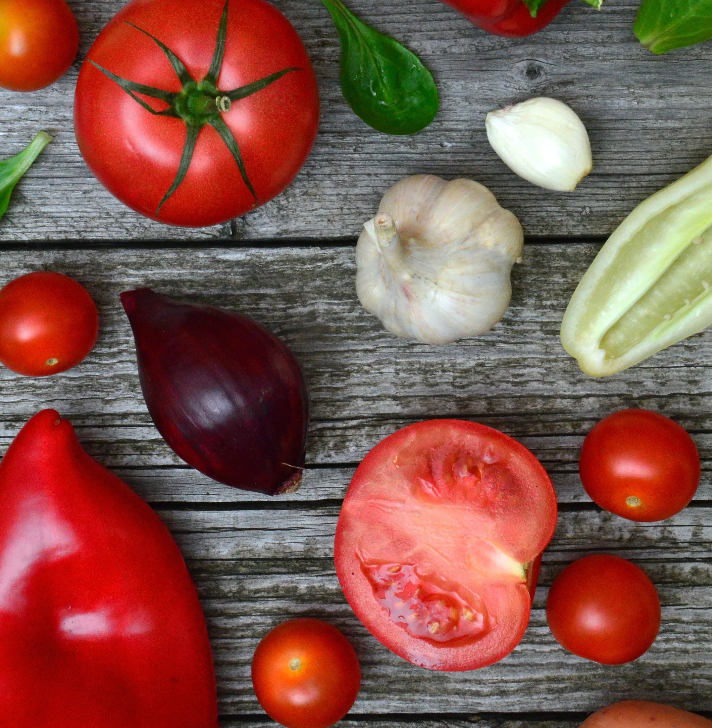
Dark leafy greens contain non-heme iron, the type found in plant foods, which is less readily absorbed than the heme iron in animal products. The way to enhance its absorption is simple: pair it with vitamin C. A squeeze of lime, some red bell pepper, a few cherry tomatoes in the sauce. Research published in the American Journal of Clinical Nutrition has documented that vitamin C can increase non-heme iron absorption by up to 300%.
Red bell peppers contain more vitamin C than an orange. According to the USDA FoodData Central database, a single red bell pepper contains approximately 190mg of vitamin C, nearly double the amount in a medium orange.
Broccoli contains sulforaphane, a compound that supports liver detoxification pathways and helps the body process and clear excess hormones. Research published in Cancer Prevention Research has examined sulforaphane’s role in supporting Phase II detoxification enzymes. For women managing hormonal conditions, cruciferous vegetables are a meaningful dietary tool.
Omega-3 fatty acids from fatty fish reduce systemic inflammation, support cardiovascular health, and are increasingly recognized as important for cognitive health. The American Heart Association recommends two servings of fatty fish per week for cardiovascular health. For women in perimenopause losing the neuroprotective effects of estrogen, omega-3s become even more important.
Seasonal and local eating matters more than most people realize. Nutrients in produce begin to deplete immediately after harvest, so the shorter the distance between farm and plate, the higher the nutritional density. Square Fare sources produce through Riviera, a local wholesaler that works with tri-state farms, specifically for this reason. I used to work at farmer’s markets across New York City for the NYC Department of Health, and the variety and freshness of locally grown produce is genuinely different from what travels across the country to reach a supermarket shelf.
Why I recommend Square Fare to my clients
When I work with clients who have complex food sensitivities, elimination protocols, or specific hormonal nutrition requirements, implementation is always the challenge. The clinical protocol is the easy part. The hard part is executing it in real life, on a busy Thursday, when lunch disappears into back-to-back meetings.
What I appreciate about Square Fare is that it’s not a cookie-cutter meal service, it’s true collaborative care. When I need to modify a meal, removing a bell pepper from a client, avoiding nightshades, swapping oil for someone with a specific sensitivity, adjusting portions for someone with different macro targets, those modifications happen. This helps me trust that my clients are receiving the highest quality care.
I also think about what I see when I look at the Square Fare menu. The color, the variety of vegetables, the quality of the proteins sourced from D’Artagnan and Fortune Fish, the same suppliers serving NYC’s Michelin-starred restaurants, and the absence of added sugar. This looks like what I’d want my clients eating. And for someone who is overwhelmed by meal decisions, can’t find time to cook, and is choosing between DoorDash and skipping lunch entirely, having something nutrient-dense, personalized, and ready in a minute changes what’s possible clinically.
Nutrition is incredibly powerful. People often know this abstractly but don’t fully appreciate it until they experience what eating the right things for their specific body actually feels like. I’ve watched clients get their periods back. I’ve watched Hashimoto’s markers normalize. I’ve watched perimenopause symptoms reduce meaningfully. The food does this. It’s not magic. It’s biochemistry. And when the food is handled with the specificity that makes the protocol sustainable, the results speak for themselves.
Lorraine Kearney, MS, RD is the founder of New York City Nutrition, a private practice specializing in female hormonal health, gut health, and integrative nutrition. She works with clients navigating PMOS (formerly PCOS), Hashimoto’s, perimenopause, food sensitivities, and complex digestive conditions using a six-pillar root-cause approach.
This post is based on a conversation from the Fed by Science podcast, hosted by Claire Goldwitz, founder of Square Fare, a New York City meal delivery service that prepares fresh, personalized meals built around each client’s exact macros, dietary restrictions, and health goals. Every meal is made from scratch, portioned individually, and ready in two minutes. getsquarefare.com — use code CHERRY for 20% off your first order.